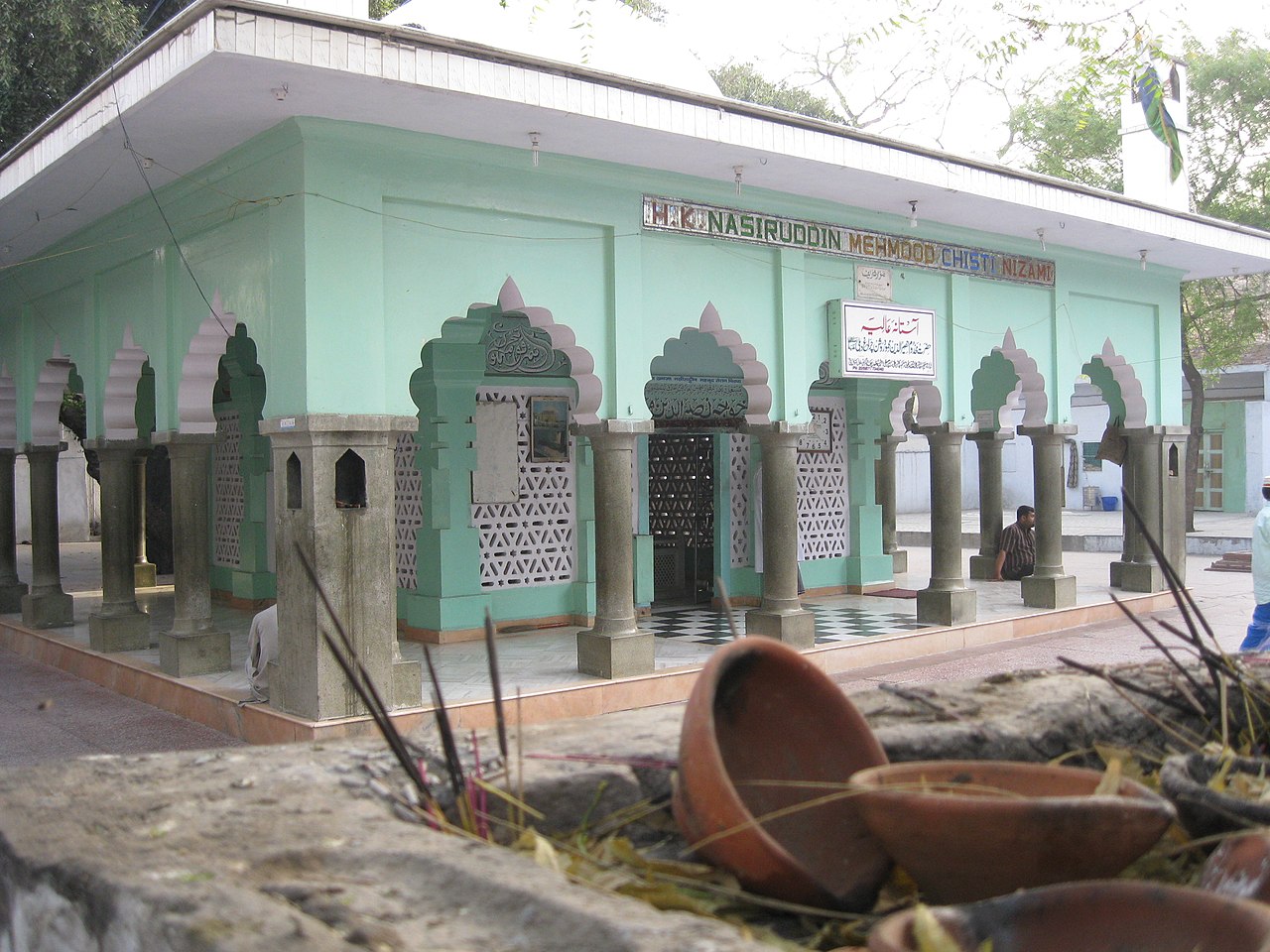
This majestic shrine dominates the Delhi skyline with its magnificent dome and minarets. As you pass through the ancient gateway, the noise of the city fades into blessed silence. The courtyard is always filled with the scent of fresh roses offered by devotees. Thursday evenings transform the space into a spiritual gathering where qawwals fill the air with divine love. The tomb itself, draped in green and gold cloth, emanates a presence that has drawn seekers for centuries.
The Saint: Khwaja Nasiruddin Mahmud Chirag-Dehlavi Dargah
Khwaja Nasiruddin Mahmud Chirag-Dehlavi Dargah is the patron saint of this dargah, associated with the Naqshbandi Order. This shrine has served as a centre of spiritual guidance, healing, and communal service for the Muslim community of Delhi and pilgrims from across the region. Hundreds of devotees visit the dargah throughout the year to offer prayers, seek barakah, and participate in the living tradition of Sufi Islam.
Spiritual Practices and Traditions
Silent dhikr (Khafi dhikr) is practised in the heart, not the tongue. Strict observance of all five prayers. The Naqshbandi master-disciple relationship (sohbet) is considered the central method of spiritual transmission.
Naqshbandi shrines tend to be quieter and more inwardly focused than Chishti shrines — the spiritual work here is subtle and internal.
History and Heritage
17th Century CE. Originally expanded by Mughal patronage, this shrine has been a center of spiritual learning for over 700 years. The structure has undergone several renovations while maintaining its original sanctity.
Key Teachings of the Naqshbandi Order
The Naqshbandi Order is the “Royal Road” of Sufism, named after Hazrat Bahauddin Naqshband (r.a.) of Bukhara. It emphasises silent dhikr, strict adherence to the Sunnah, sobriety in spiritual states, and presence of heart in all moments.
Adab — Etiquette for This Shrine
Perform wudu or at least wash hands, face, and feet before entering. Remove shoes at the designated area. Cover head at all times. The traditional offering here is red roses. Recite Durood Sharif 11 times upon entering. Do not turn your back to the tomb when leaving – walk backward three steps before turning. Thursday evenings hold special blessings.
Visiting Information
Frequently Asked Questions
Who is the saint at Hazrat Khwaja Nasiruddin Mahmud Chirag-Dehlavi Dargah?
The shrine is dedicated to Khwaja Nasiruddin Mahmud Chirag-Dehlavi Dargah, associated with the Naqshbandi Order order. The dargah serves as the final resting place and spiritual seat of the saint, who continues to guide devotees through barakah (spiritual blessing) from the unseen world.
What is the best time to visit Hazrat Khwaja Nasiruddin Mahmud Chirag-Dehlavi Dargah?
During the annual Urs festival, typically lasting 3-7 days, when the entire area is decorated and special prayers are held continuously.. The annual Urs (death anniversary) of Khwaja Nasiruddin Mahmud Chirag-Dehlavi Dargah is the most spiritually charged time to visit, when the shrine is decorated, special prayers are held continuously, and qawwali fills the air from morning to night.
Can non-Muslims visit Hazrat Khwaja Nasiruddin Mahmud Chirag-Dehlavi Dargah?
Yes. Sufi shrines welcome all of humanity regardless of faith. The great Sufi masters themselves taught that divine love recognises no boundary. Come with a respectful heart, modest dress, and an open spirit.
What should I bring when visiting?
A head covering (cap for men, scarf for women). Modest loose-fitting clothing. Optional: fresh flowers (red roses are traditional at most shrines), incense (agarbatti), or a small charitable donation for the poor boxes. Shoes are removed — a small bag for them is useful.
Shrine History
17th Century CE. Originally expanded by Mughal patronage, this shrine has been a center of spiritual learning for over 700 years. The structure has undergone several renovations while maintaining its original sanctity.
Visiting Information
Photo Gallery